blog
Choosing a resident portal? Start with the right evaluation framework
Rising resident expectations, increasing regulatory requirements and a growing focus on service quality are all significantly impacting what good looks like when it comes to resident portals.

Social housing providers face increasing expectations around the quality, accessibility and responsiveness of their services. Many are already investing in better ways to communicate with residents, improve service delivery and give people greater control over their homes and tenancies.
Regulation is adding further impetus. Awaab's Law introduced strict timescales for investigating and addressing hazards, while the Regulator of Social Housing's Transparency, Influence and Accountability Standard places greater emphasis on accessible information, communication and accountability. In addition, the newly launched Social Tenant Access to Information Requirements (STAIRs) are also strengthening tenants' rights to information about their landlord's services and activities.
Residents, meanwhile, bring expectations shaped by their everyday experiences with banks, retailers and other digital service providers. They increasingly expect convenient access to information, greater control over transactions and visibility of what happens after they make a request.
The growing role of the resident portal
A well-designed resident portal can help bring these requirements together. It can give residents easier ways to report repairs, raise concerns, manage appointments, access tenancy information and follow the progress of requests. For housing providers, it can significantly improve communication, reduce routine administration requests while also supporting more responsive service delivery.
The opportunities that a well-designed resident portal offers is considerable. But realising these benefits depends on choosing a portal that works equally well for the organisation delivering services and the residents using them.
Two audiences. One important decision.
Resident portals are often evaluated primarily against the resident experience. Yet housing providers have their own requirements, from managing services and internal processes to integrating various technology solutions used across the organisation, and maintaining a reliable service over time.
A portal that performs well for one audience may therefore not necessarily meet the needs of the other. This makes a structured approach to evaluation particularly valuable.
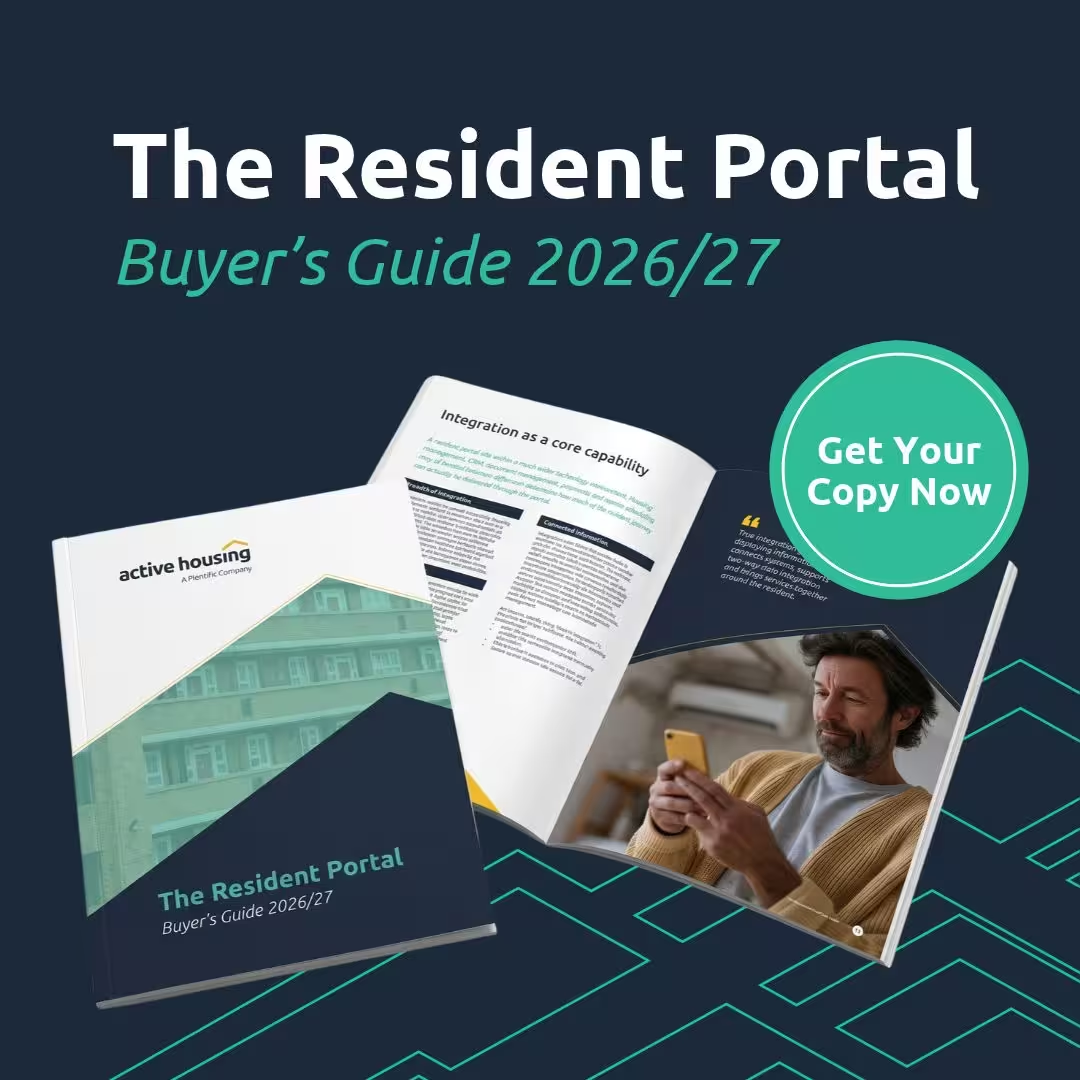
Active Housing's Resident Portal Buyer's Guide uses the four key drivers of technology adoption - Ease of Use, Usefulness, Trust and Support – to examine both the resident and housing provider perspective, providing a practical framework for assessing the technology, the services it enables and the supplier behind it.
The guide also considers integration as a core capability, recognising that a resident portal increasingly depends on information and processes held across multiple systems.
Make a more informed buying decision
Choosing the right resident portal for today’s demands requires looking in depth at how the technology will perform in practice, for both residents and your organisation.
Download Active Housing's Resident Portal Buyer's Guide to explore the four evaluation criteria and the practical considerations behind a successful resident portal buying decision.